
Blog
Best Indian Tiffin Service in Ottawa in 2026

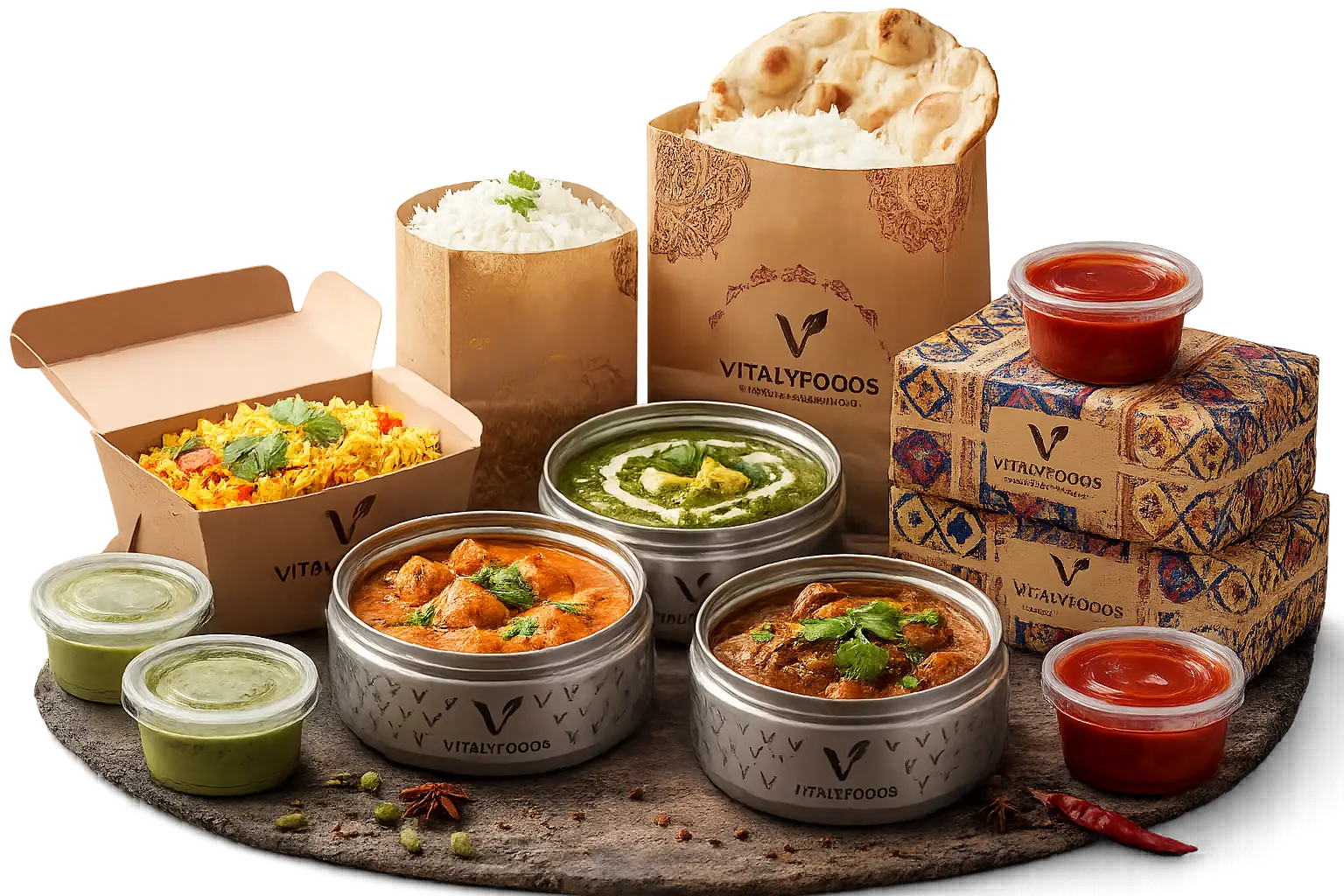
How Vitaly Foods Is Changing the Tiffin Delivery Market
If you are searching for the best Indian tiffin service in Ottawa in 2026, the choices have grown considerably. Indian tiffin is no longer limited to a small number of home-based meal providers. Ottawa now has dedicated tiffin businesses, restaurant-based meal services and newer food-delivery models competing for customers who want convenient, regular Indian meals at home.
Among the names customers will encounter are Bytown Tiffins, Zaika Tiffin Ottawa and Desi Tadka, along with other local providers. Bytown Tiffins has established a dedicated Indian tiffin operation serving Ottawa and surrounding communities, while Desi Tadka combines its restaurant business with a daily tiffin service.
But the market is beginning to change again. Customers are becoming more interested not only in what is being delivered, but in how the entire service is designed: the quality of the food, the convenience of ordering, the ability to manage a subscription, delivery times, consistency and, increasingly, the price.
This is where Vitaly Foods is changing the Ottawa tiffin market in 2026 to be become the top tiffin delivery service.
The Ottawa Indian Tiffin Market Has Changed
The basic idea behind tiffin is simple: provide a freshly prepared, complete meal on a regular basis so that customers do not have to cook every day. The concept has particular appeal to students, professionals, families and anyone who wants the convenience of prepared food without relying on restaurant takeout for every meal.
Established providers have helped create this market in Ottawa. Bytown Tiffins, for example, describes its service as fresh, home-style Indian food delivered to customers across Ottawa and promotes weekly plans for students, professionals and families. Its current website offers both vegetarian and non-vegetarian meal plans, including weekly and larger-volume packages.
Desi Tadka represents another model. It operates established Indian restaurant locations while also offering tiffin service, with its current service covering areas including Kanata and Stittsville. Its tiffin offering includes vegetarian and non-vegetarian plans, with weekly and monthly options.
Zaika Tiffin Ottawa is also part of the local tiffin conversation. Together, these businesses demonstrate that Ottawa customers are increasingly willing to make prepared Indian meals part of their regular food routine rather than treating Indian food only as an occasional restaurant purchase.
The question now is what the next generation of tiffin service should look like.
Vitaly Foods Is Approaching Tiffin Differently
Vitaly Foods is not trying to become another Indian restaurant that happens to offer delivery. The company is being developed around a more focused proposition: fresh, home-style vegetarian meals prepared for regular delivery to people’s homes.
That difference affects the entire business model.
The food has to be good enough for customers to want it regularly. The ordering system has to make it easy for customers to manage their service. The kitchen has to be organized around producing meals efficiently rather than around running a traditional restaurant. Delivery has to be planned around recurring customers and efficient routes. And, ultimately, the entire system has to work toward a price that makes sense for families.
This is the central idea behind Vitaly Foods: tiffin should not simply be convenient; it should be an economically sensible alternative to cooking at home.
- Food Comes First: Chef Swati Chadha
The most important part of any tiffin service is still the food.
Vitaly Foods puts Chef Swati Chadha at the centre of its food offering, with a focus on fresh, vegetarian, home-style meals. The intention is not to turn every meal into a restaurant-style experience. Tiffin is different. It is food that customers may eat several times a week, which means it has to be satisfying, familiar and suitable for everyday life.
That makes consistency particularly important. A customer choosing a tiffin service is not simply buying one meal. They are deciding whether they can trust that service to provide a good meal tomorrow, next week and throughout the month.
Vitaly Foods is therefore focused on building the food around the idea of everyday home-style eating, rather than occasional restaurant dining.
- Dinner Tiffin Is at the Centre of the Vitaly Foods Model
One of the clearest differences in the Vitaly Foods proposition is its focus on dinner tiffin delivered to the home.
Lunch is often easier for people to solve. Students may eat on campus, professionals may eat at work and people may have access to restaurants or cafeterias during the day. Dinner is different. It is the meal that families have to think about when everyone comes home.
Someone has to decide what to make, buy the ingredients, prepare the food, cook it and clean up afterward. For a working family, that can become one of the most time-consuming parts of the day.
Vitaly Foods is designed around solving that particular problem. Its dinner tiffin service is delivered during the 3 PM to 7 PM window, making it possible for customers to have a prepared meal available as they return home and begin their evening.
This is an important distinction in the market. Restaurant-based businesses such as Desi Tadka have to balance dine-in service, takeout, catering and their broader restaurant operations alongside tiffin. Desi Tadka’s current website, for example, lists dine-in, takeout, catering, private events and tiffin as separate parts of its business.
Vitaly Foods is taking a more focused approach. The home meal is the core of the business.
That allows the operation to be designed around the customer who wants a regular meal delivered to the home rather than around the customer walking into a restaurant.
- A Tiffin Service That Customers Can Manage Online
Convenience should not end when the food is delivered.
Modern customers expect to be able to manage services online, and tiffin should be no different. People travel. Students leave Ottawa during school breaks. Professionals go away for work. Families take vacations. A customer may want meals this week but not next week.
Vitaly Foods is designed to make that process easier through its online ordering system, where customers can start and pause their service rather than having to reorganize their lives around a fixed meal plan.
That may sound like a small feature, but it changes the relationship between the customer and the service. Instead of treating a tiffin subscription as something rigid, the service can fit around the customer’s schedule.
For a recurring food service, flexibility is part of convenience.
- The Real Difference Is the Business Model
The most important difference between Vitaly Foods and a conventional restaurant is not simply the menu. It is the way the business thinks about the economics of a meal.
A restaurant is designed to serve restaurant customers. A grocery store is designed to sell ingredients. A delivery platform is designed to move orders between restaurants and customers.
Vitaly Foods is being designed around something different: producing and delivering a large volume of fresh meals efficiently to homes.
That means looking at every stage of the process.
Ingredients have to be sourced efficiently. Production has to be planned efficiently. Food has to be portioned and packaged consistently. Orders have to be grouped intelligently. Delivery routes have to be optimized. The more efficiently those processes work together, the lower the cost associated with each meal can become.
This is why Vitaly Foods sees scale as an important part of its strategy.
- Why Volume Matters
The objective is not simply to sell more meals for the sake of becoming a larger company. Volume is important because it can fundamentally change the economics of food production and delivery.
A household buys ingredients in retail quantities. A high-volume food operation can potentially purchase larger quantities directly from suppliers, plan production more accurately and reduce the inefficiencies associated with preparing individual meals one at a time.
The same principle applies to delivery. Delivering one meal across a city can be expensive. Delivering many meals along a carefully planned route can make the cost of transportation much more efficient on a per-meal basis.
The Vitaly Foods strategy is therefore built around a simple relationship:
More volume can create greater efficiency, and greater efficiency can create better value for customers.
That is a fundamentally different way of thinking about the tiffin business.
- Moving Closer to the Source
As the business grows, Vitaly Foods’ vision is to source raw materials more directly rather than depending entirely on retail grocery channels.
The objective is not to sacrifice quality in order to reduce cost. It is the opposite. Better sourcing should make it possible to obtain good ingredients more efficiently and create greater consistency in the kitchen.
When purchasing, production and demand can be planned together, the business has more control over its food costs and less dependence on the economics of retail grocery shopping.
For a company whose long-term objective is affordable prepared food, sourcing is therefore an important part of the strategy.
- Efficient Production Without Losing the Home-Style Experience
Scale does not have to mean sacrificing the qualities that make tiffin attractive in the first place.
Customers are not looking for an industrial meal. They want food that feels familiar and freshly prepared.
The challenge is therefore to put the efficiency behind the scenes, while keeping the customer experience simple.
The customer should receive a fresh meal that is properly portioned, packaged and delivered on time. They should not need to know how the production schedule works, how ingredients were purchased or how the delivery route was calculated.
That complexity belongs to the operation.
The customer should simply experience good food delivered conveniently.
- Delivery Is Part of the Food
The meal does not end when it leaves the kitchen.
Delivery is one of the biggest components of the economics of a home-meal business, particularly when customers are spread across a large city. Poor routing can add unnecessary kilometres, time and cost to every meal.
Vitaly Foods therefore sees delivery as part of the product rather than an afterthought.
As customer volume grows, recurring orders can create denser delivery routes. Better route planning can allow multiple customers to be served efficiently within the same geographic area. That can reduce unnecessary travel and improve the economics of the entire service.
This is another reason why Vitaly Foods is interested in building volume. A larger customer base can make the delivery network more efficient, not simply the sales numbers larger.
- The Ambition: Make Fresh Food Competitive With Cooking at Home
This is perhaps the most ambitious part of the Vitaly Foods vision.
Most prepared food businesses compare themselves with restaurants. Vitaly Foods wants to think differently.
The real competition for an everyday family meal is often not another restaurant. It is the family kitchen.
When a family cooks at home, the cost is not only the ingredients. There is also the time spent shopping, preparing, cooking and cleaning. There can be unused ingredients and food waste. There is also the daily decision of what to make.
Vitaly Foods wants to create a system in which a customer can receive a fresh, home-style meal without carrying all of those costs in time and effort.
The long-term objective is straightforward: use better sourcing, efficient production, high volume and smart delivery to make a prepared meal affordable enough to compete with the economics of cooking at home.
That does not mean making cheap food.
It means making good food more efficiently.
What Should Customers Look for in the Best Indian Tiffin Service in Ottawa?
There is no single feature that makes a tiffin service the best choice for every customer. Price matters, but so does food quality. Convenience matters, but so does consistency. Delivery matters, but so does the ability to manage the service when life changes.
For someone comparing Indian tiffin services in Ottawa in 2026, the important questions are increasingly becoming:
- Who is preparing the food, and how good is it?
- Is the service designed specifically around regular meal delivery?
- Can customers easily start, pause or resume their service?
- Is dinner available at a convenient time?
- Is the food genuinely suitable for everyday eating?
- Is the company focused on efficient delivery?
- Can the business use scale and better sourcing to provide better value?
These are the areas where Vitaly Foods believes the next generation of tiffin service will compete.
Vitaly Foods and the Next Stage of Ottawa Tiffin
Bytown Tiffins, Zaika Tiffin Ottawa and Desi Tadka are part of a market that has already demonstrated that Ottawa customers want convenient Indian meals delivered regularly. Bytown has built a dedicated tiffin operation around Indian meal delivery, while Desi Tadka has incorporated tiffin into a broader restaurant and food-service business.
Vitaly Foods is to taking the concept further.
The focus is not simply on adding another meal-delivery option. It is on building a dedicated system around the everyday home meal: food prepared under the direction of Chef Swati Chadha, a convenient online ordering experience, dinner-focused delivery, efficient production, better sourcing and increasingly efficient delivery.
Most importantly, Vitaly Foods has a clear economic objective behind that model.
The company wants to use volume and efficiency to make fresh, healthy, home-style food increasingly affordable for ordinary families.
That is the opportunity Vitaly Foods sees in Ottawa’s tiffin market in 2026.
The market already has established names. The next question is who can build the most efficient, customer-focused and scalable model for the future.
Vitaly Foods believes that the future of Indian tiffin in Ottawa is not simply about delivering food. It is about building a better way for families to eat.